The Westminster ideal: A useful myth
How NPM made Westminster blunder-prone
 The Westminster model of governance created a “symbiotic partnership” between the ministers responsible for government departments and the career civil servants who ran them, David Richards and Martin J. Smith argue in the current issue ofGovernance. But the advent of New Public Management changed that, introducing new pathologies into British government. “The most crucial pathology,” they say, “is that the deliberative space afforded for critical engagement over public policy has been diminished.” The result? A government that is more vulnerable to serious blunders. Read the article. The article is part of a special issue on the future of the Westminster model.
Book reviews: The politics of information, horizontal management
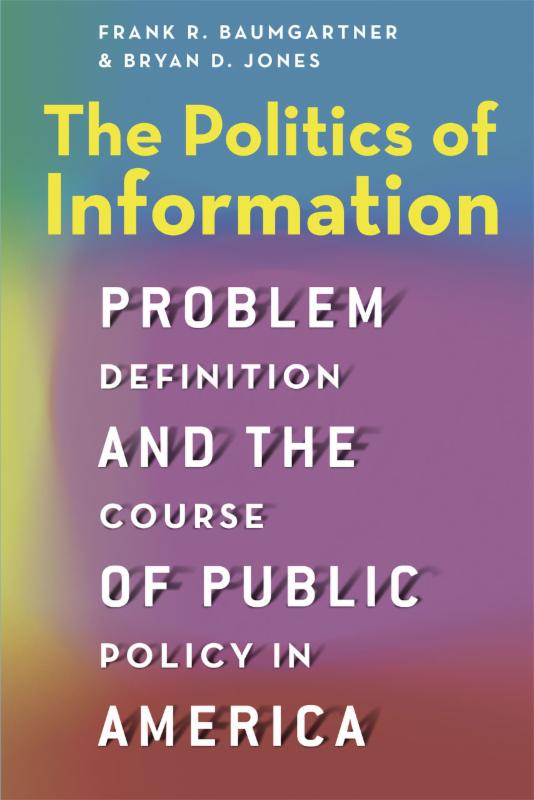 In the current issue of Governance, Jacob Hacker reviews The Politics of Information by Frank Baumgartner and Bryan Jones. “It is a formidable achievement,” says Hacker. “Baumgartner and Jones cast governance as a problem of information: getting it (or restricting it), ensuring that it is reliable (which sometimes means reliably consistent with one’s priors), and acting on it.” Read the review.
Commentary: Escaping the trap of systemic corruption
 Why isn’t the “anti-corruption industry” more effective? In a commentary for Governance, David Arellano-Gault says the problem is “the failure to fully acknowledge the organizational role played by corruption in many societies. When a society experiences systemic corruption, it has built a solid, effective social trap.” He argues that the usual prescriptions of anti-corruption advocates are not enough to break “a socially and culturally sustained vicious circle.” Free access to the commentary. David Arellano-Gault is a Professor of Public Administration at the Centro de Investigación y Docencia Económicas (CIDE) in Mexico City.
CFP: Public management and institutional quality
The Structure and Organization of Government section of the International Political Science Association, together with the Quality of Government Institute at the University of Gothenburg, invite you to submit a paper for a workshop on Public Management and Institutional Quality. The workshop will be held on June 7-8, 2017. More details about the call for papers here.
Is the Westminster model dead?
 For more than a century, the Westminster system was one of the most influential models of public administration in the world. Countries in the “Westminster world” claimed the benefits of a strong executive and an impartial, professional bureaucracy. The October issue of Governance examines the health of the Westminster model today. In their introduction to the special issue, Dennis Grube and Cosmo Howard pose the big question: Is the model “under threat, dying, or already dead?” Read the introduction to the special issue.

Why voters sometimes prefer criminals as candidates
Written by Governance
October 24, 2016 at 2:50 pm
Posted in commentary