How authoritarianism intensifies policy shifts
 “Punctuated equilibrium” — the pattern in which incremental policy changes are blocked, until pressure finally produces a big shift — is widely regarded as a democratic disease. In the current issue of Governance, Wai Fung Lam and Kwan Nok Chan examine sixty years of policymaking in Hong Kong, under both colonial and postcolonial regimes. Their study finds that the “pattern of punctuation and stasis” was evident even when the system had authoritarian features. In fact, “punctuation was greater when the political system was more centralized but declined as the political system democratized.” Read the article.
How left-wing government sparks growth of rules
 Rules — in the form of laws and regulations — are a key output of government, and many people have tried to explain why the level of rule production rises and falls. In the current issue ofGovernance, Mads Leth Felsager Jakobsen and Peter B. Mortensen add to existing knowledge by emphasizing the importance of politics. Their long-term study of Danish government finds that “the rule-based bureaucratization of society” increases when left-wing parties hold power. Rule production within a policy domain may also increase when that domain is positioned higher on the policy agenda — but this “agenda effect” is only observable in policy domains with low technical complexity. Read the article.
Feedback mechanisms can undermine policy too
 Most studies of policy feedback focus on the ways that programs can endure and expand over time. In the current issue ofGovernance, Alan Jacobs and Kent Weaver explore feedback mechanisms that gradually undermine the foundation for existing policies. They outline three of these “self-undermining” mechanisms and explain the conditions under which each mechanism is likely to operate. “The analysis,” the authors explain, “expands political scientists’ theoretical toolkit for explaining policy development over time.” Read the article.
Why public management is a flawed kind of statecraft
 Alasdair Roberts contributes to our blog’s conversation on public management and the state: “Even the most abstract works of political theory are never above the battle,” the historian Quentin Skinner has observed, “They are part of the battle itself” (Skinner 2008, xvi). The same can be said about modes of inquiry such as Public Management Research (PMR). PMR ought to be understood as the product of a particular phase in the development of some advanced western states. But this fact is rarely acknowledged. Read the rest of this entry »
When more women means lower levels of corruption
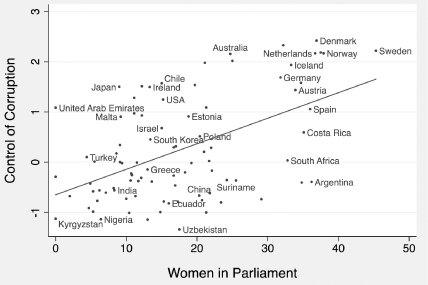 It has been argued that recruiting more women to public office can be an effective way of reducing corruption. In the current issue ofGovernance, Helena Stensöta, Lena Wängnerud, and Richard Svensson find some support for that claim, but also explore the conditions under which it is more likely to be true. Their multi-country study finds that the relationship between representation of women and corruption is stronger in the legislative arena than in state administration, perhaps because “the bureaucratic administrative logic absorbs actors’ personal characteristics.” Read the article.
Reply to Coen & Pegram: Three ways to fix global governance research
 Jack A. Seddon replies to our conversation on the Coen/Pegram commentary on global governance research: With three simple observations, I would like to concur with the call for a third generation of global governance research. I would further agree with Professors Coen and Pegram that global governance is failing, though it is probably too much—and a wholly ungenerous reading of the understandably polemical call to arms published in Governance—to assert that it is failing equally everywhere. My only comment is that the ubiquitous backsliding and inadequacy that characterises much of what constitutes global governance is probably only a surprise to the second generation of global governance scholarship. This, if correct, suggests three relatively concrete things about the next generation of research. Global governance analysis needs to be less functionalist and conceptual, more attuned to power and political conflict, and better grounded in its empirical claims. Read the rest of this entry »

Migration: Unilateralism is putting lives at risk
Written by Governance
January 4, 2016 at 12:31 pm
Posted in commentary