Levine Book Prize
About the Levine Prize
Each year, the International Political Science Association’s Research Committee on the Structure and Organization of Government (SOG), sponsor of the journal Governance, awards the Levine Prize. The Prize is awarded to a book that
- makes a contribution of considerable theoretical or practical significance in the field of public policy and administration;
- takes an explicitly comparative perspective or produces findings the implications of which are highly significant for comparative research; and
- is written in an accessible style and form so that it is of value both to scholars and practitioners.
The prize is named in honor of Charles H. Levine, an outstanding scholar in the fields of public policy and administration. He played a major role in the creation and early life of the SOG Research Committee and Governance. After his untimely death in 1988, the Editorial Board of Governance and the Executive Committee of SOG established an annual book prize in his memory.
Call for nominations: 2017 Levine Prize
The Levine Book Prize Committee is seeking nominations for the 2017 Levine Prize. More details here. The committee is composed of Professor Tobias Bach (University of Oslo), Professor Caspar van den Berg (Leiden University), and Professor Ting Gong (City University of Hong Kong).
The 2016 Levine Prize
 August 2, 2016 — The Levine Prize for books published in 2015 has been awarded to Networks in Contention: The Divisive Politics of Climate Change (Cambridge University Press) by Jennifer Hadden. Hadden is an Assistant Professor in the Department of Government and Politics at the University of Maryland.
This year’s committee was composed of Professors Wai-Fung Lam (The University of Hong Kong; Chair), Alan M. Jacobs (University of British Columbia) and Beryl A. Radin (Georgetown University).
The committee says:
This interesting book examines civil society organizations’ choice of mobilization strategy on climate change. It documents how organizations operate and interact with one another within the international climate change movement, explains how an organization’s position in movement networks affects its decisions on advocacy tactics, and demonstrates how groups’ strategies influence the global climate policy debate. The book takes an explicitly comparative perspective in dealing with international policy struggles. It provides not only rich discussion of issues involving networks in the policy area of policy change, but also a model for examination of other policy areas that involve both governmental and nongovernmental actors. Written in an accessible style, the book can be used as supplemental readings for courses in different fields.
 The volume’s theoretical contributions emerge from bridging the literature on social movements and collective action with the increasingly rich literature on social networks and their political consequences. Studying international networks presents difficulties of both data collection and causal inference. The book confronts these challenges through a powerful mixed research strategy that deploys a wide range of data sources at different levels of analysis to map out network structures, chart degrees and trajectories of contentious action, and trace out the mechanisms through which networks exert their effects on organizational decision making. The book’s triangulation across empirical strategies makes for a highly compelling set of findings.
The Award Committee is pleased to see this year’s Levine Prize go to this interesting book which makes a contribution of great academic and policy significance.
Previous winners of the Levine Prize
 2015. Jessica Green. Rethinking Private Authority: Agents and Entrepreneurs in Global Environmental Governance (Princeton University Press). “This fascinating book is a decisive contribution to the governance debate as it investigates the emergence, growth, and influence of private actors in global environmental and climate governance. It offers an innovative and novel theoretical approach, differentiating between ‘delegated private authority’ where state actors explicitly delegate rule-making authority to private actors and ‘entrepreneurial private authority’ where private actors engage in rule-making without such a delegation of state authority. Its empirical analysis combines quantitative methods assessing the growth and extent of private authority that is based upon novel systematic data on transnational environmental civic regulations with exceptionally well-conducted case studies on private authority in specific regulations of the Kyoto Protocol as well as in greenhouse-gas accounting and reporting. This book advances our understanding of the role of private actors in transnational governance, most notably showing the relevance of the interplay between public and private actors for generating private authority. It demonstrates that entrepreneurial private authority is on the rise – and thereby triggers new research questions on legitimacy, accountability, and the relevance of public-private interactions for transnational governance. This book’s insights will make it highly relevant and useful for students of a wide range of topics in public administration and governance, public policy, and comparative politics.”
 2014. Christopher Adolph. Bankers, Bureaucrats, and Central Bank Politics (Cambridge University Press). “This interesting and innovative book raises important questions about the assumed all-importance of central bank independence and provides a fascinating insight into the ways the professional background of key officials shapes monetary policy. . . . The book is meticulously researched, drawing on large amounts of new comparative data and using sophisticated methodological tools.”
2013. David Vogel. The Politics of Precaution: Regulating Health, Safety, and Environmental Risks in Europe and the United States (Princeton University Press).  “In recent decades, the politics of risk regulation has played a growing role all round the world. In his carefully crafted and compelling book The Politics of Precaution: Regulating Health, Safety, and Environmental Risks in Europe and the United States (Princeton University Press, 2012), David Vogel explores the changing transatlantic policy divergence in risk regulation. Dealing with an impressive number of issues, ranging from food safety and agriculture to air pollution, consumer safety and chemicals and hazardous substances, this well-written and policy-relevant book formulates an original framework to explain the regulatory and perception gap between Europe and United States.”
2012. Alan M. Jacobs, Governing for the Long Term: Democracy and the Politics of Investment (Cambridge University Press, 2011). “Unlike most comparative studies of politics, which ask who gets what and how, Governing for the Long Term explores an overlooked dimension: the politics of when. In particular, the puzzle is to ask why some governments, instead of falling prey to the temptations of short-termism, decide to make policy investments for the future.  Jacobs uses case studies of Germany, Canada, the US and Britain to demonstrate how divergent are the national patterns in terms of taking into account the future; some countries have run up extraordinary debt during the latest 30 years, others have kept constant (or even reduced) their debt-to-GDP ratios. Some countries have preserved ‘Pay-As-You-Go’ pension systems that imply higher future costs for tomorrow’s taxpayers, while others have shifted to ‘funded’ systems that, quite the contrary, impose major short-term losses in exchange for enhanced long-run financial sustainability. Jacobs discovers two compelling findings. First, most cases of failing to invest in the future are due not to politicians’ short-termism (convincingly, the author shows that most politicians were truly interested in achieving long-term goals) but to the pressures of organized interests (who are the ‘villains’ in most of the stories). This finding should force us to rethink the usual political economy assumptions of politicians as short-sighted re-election seekers. Second, more important than a politician’s valuation of the future is the prevailing ideology at the time a policy decision is taken. Thus the book provides a trenchant reminder of the power of ideas about the future to shape decisions taken today.”
2011: Jonathan G.S. Koppell, World Rule: Accountability, Legitimacy, and the Design of Global Governance (University of Chicago Press, 2010). “World Rule is a highly readable book examining the accountability and legitimacy of global governance organizations (GGOs) using an unconventional but vigorously articulated institutional perspective. 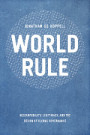 Jonathan Koppell shows that both the power and constraints of GGOs come from institutional choices and questions the usual democratic critique of GGOs within the notion of what he alludes to as responsibility-type accountability. In contrast, he argues for a more realistic approach to conceptualize the tensions between the normative expectations facing GGOs and the practical demands of building and maintaining authority in today’s transnational context, where the delivery of results count more than the elusive pursuit of formal accountability or the traditional norms of democratic legitimacy. This he defends as responsiveness-type accountability. Koppell vigorously assesses previous arguments and explanations in his theoretical construction, and makes reference to 25 GGOs with different functions and backgrounds to support his case, arguing that in the real-world the logic of global governance is such that ‘GGOs must create and implement rules to satisfy highly varied constituents, keep members (nation-states and/or nongovernmental entities) committed to participation, and do both without the coercive tools associated with the governmental bodies typically charged with such tasks’ (p. 5). The book thus suggests that GGOs are “unaccountable by necessity”, which to some borders on heresy, but makes a lot of explanatory sense. Hence GGOs do not ‘solve’ the accountability problem; they manage it with a mixture of structural and procedural features that trade legitimacy for authority, and vice versa (p.319). World Rule has made a significant contribution to the understanding of the complex nature of global governance.”
2010: William Ascher, Bringing in the Future: Strategies for Farsightedness and Sustainability in Developing Countries (University of Chicago Press, 2009). “Farsightedness is no doubt much in demand for governmental efforts on sustainability, but what is needed is concrete advice to navigate one’s way through the myriad of uncertainties, recalcitrance and shortsightedness built into both cognitive prejudice and institutional inertia.  William Ascher has published a highly readable book which precisely addresses these practical problems, with clear categorization of problems and strategies, and hints on how to manage the process. His long menu of innovative and insightful approaches and tools to overcome them stem from economic, as well as social psychological theories – such as altering the existential situation of people so that they would think differently, creating or rescheduling both tangible and intangible rewards (including increasing nearer-term benefits of farsighted actions), shaping communications to establish climates or moods, improving analytical frameworks, framing the appeals, creating conducive institutions, restructuring decision-making processes and rules of interaction, and realigning performance evaluation. The book should serve as an essential reader in public policy studies, and a must for all policy practitioners, government leaders, senior civil servants, politicians as well as advocates from NGOs.”
2009: Mitchell A. Orenstein, Privatizing Pensions: The Transnational Campaign for Social Security Reform (Princeton University Press, 2008). “The opening of personal pension statements has become a dramatic moment in recent years, given far-reaching shifts in many pension systems around the world and doubts concerning the viability of many plans. 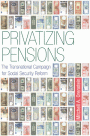 Mitchell A. Orenstein offers a penetrating analysis of the evolution of pension governance, placing emphasis on the ability of transnational actors to persuade many of their national counterparts to embrace privatization principles in recent decades. From Chile to Kazakhstan, Privatizing Pensions demonstrates how advocates of pension privatization advanced their case in recent decades through a mixture of ideational tactics and material incentives. These entrepreneurs were not uniformly influential, and yet their overall record suggests a considerable capacity to influence decisions that generally would be expected to be sealed within a domestic policy process. Orenstein’s contribution will be of interest to a wide range of scholars and policymakers, both for its insights into this particular area of governance and also for its exploration of the transnational-national dynamic. The book also opens important doors to further investigation of this dynamic in other policy arenas.”
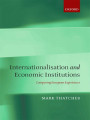
2008: Mark Thatcher, Internationalisation and Economic Institutions: Comparing the European Experiences. Oxford University Press, 2007. “This volume is an important new theoretical contribution in its specification of a concept of internationalization that is not globalization and its understanding of national economic institutional reform in a way that is not just supra-nationalization within continental treaty blocs. Its theoretical and empirical sophistication, along with its comparative scope, more than warrant the recognition and honor of the Charles H. Levine Memorial Book Prize.”
2007: Alasdair Roberts, Blacked Out: Government Secrecy in the Information Age, Cambridge University Press, 2006. “The book deals skillfully with an issue of central importance in modern 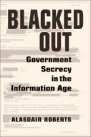 governance: the openness of government to its citizens. Roberts charts the rise of transparency mandates across the globe, noting the potential of laws, such as the Freedom of Information Act, to foster greater accountability and responsiveness in government. However, Blacked Out shows how governments undermine or curtail transparency laws by creating exemptions for security issues, erecting administrative barriers to make access to information more difficult, and undermining implementation by failing to provide necessary resources. The book also skillfully considers how current trends—toward privatization, globalization, networks, and technology changes—affect openness in government.”
2006: Herrington J. Bryce, Players in the Public Policy Process: Nonprofits as Social Capital and Agents. Palgrave/MacMillan, 2005.  “Organizations with substantial public trust and public purposes themselves, nonprofit organizations often compete head-on with much larger and often more professional private corporations for government contracts. The NGOs often win. In fact, they consistently win in many areas. Bryce demonstrates the reasons for these facts. In applying well-developed theories from principal–agent literature, he makes clear that there are substantial advantages to public–NGO alliances in government service delivery. The committee believes that the book has general applicability and will be increasingly important in the years to come as governments across the globe continue to search for the most efficient and effective ways to provide public services. Partnerships with organizations that themselves serve a public service are already a substantial part of this equation and will increasingly be so. Bryce shows why this is the case.”
 2005: Atul Kohli, State-Directed Development: Political Power and Industrialization in the Global Periphery. Cambridge University Press, 2004. “Atul Kohli’s argument is complex and eschews formulas or simple recipes. His cases show that much depends on circumstances and the discovery by trial and error of policies that work. The lesson to be drawn is that there are no simple solutions, easily duplicated by aspiring industrializers. Instead, leaders must know the historical and institutional circumstances of their societies, must be able to identify challenges and opportunities, and must have the political steel to articulate bold solutions and carry them out.”
 2004: Jonathan Malloy, Between Colliding Worlds: The Ambiguous Existence of Government Agencies for Aboriginal and Women’s Policy. University of Toronto Press, 2003. “This is a persuasively argued, lively written book. The committee was particularly impressed with the sustained comparison across two policy fields in two countries, and the way in which the author integrates conceptual and empirical analysis. This is an unusually enjoyable read, which offers an important policy message: in a world of proliferating social activism, ambiguity in administration may be a blessing rather than a curse for making governance more efficient, effective, and legitimate.”