Archive for the ‘book reviews’ Category
Book reviews: Hive minds, US foreign policy, Indian cities
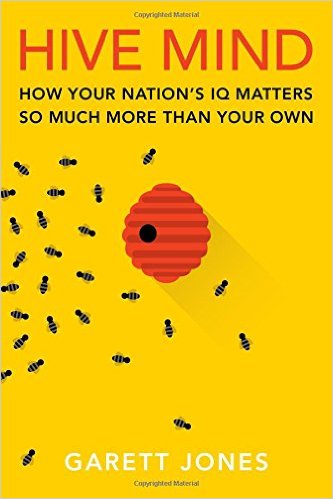 In the current issue of Governance, Fred Thompson reviewsHive Mind by Garett Jones. “Jones sets out to explain why higher cognitive ability scores are so much more important for collectivities than for individuals.” It might be the year’s most important economics book, says Thompson. Read the review.
Book reviews: The politics of information, horizontal management
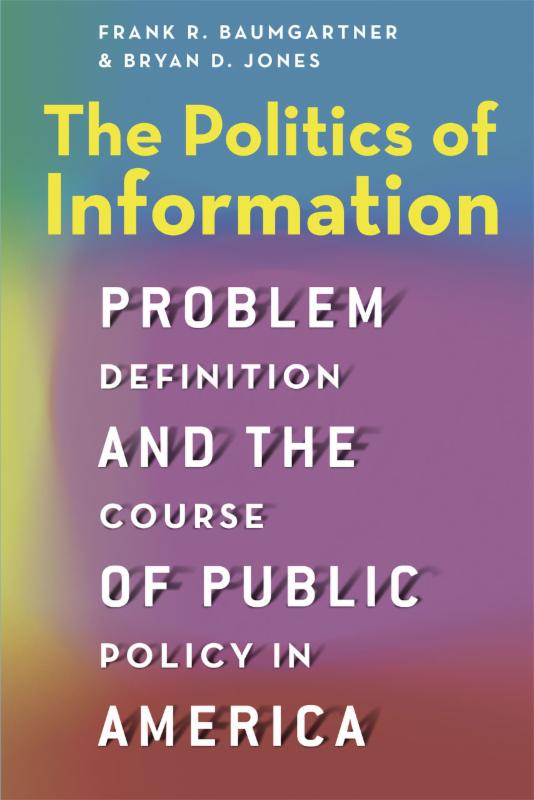 In the current issue of Governance, Jacob Hacker reviews The Politics of Information by Frank Baumgartner and Bryan Jones. “It is a formidable achievement,” says Hacker. “Baumgartner and Jones cast governance as a problem of information: getting it (or restricting it), ensuring that it is reliable (which sometimes means reliably consistent with one’s priors), and acting on it.” Read the review.
Book reviews: Blood oil, China’s civil service
 In the current issue of Governance, Frank Vogl reviews Blood Oil: Tyrants, Violence, and the Rules that Run the World by Leif Wenar. Vogl says that the book “builds a compelling case for a trade boycott on oil, gas, gold, and other mineral exports from some 30 nations run by corrupt regimes.” Read the review.
Understanding Europe’s refugee crisis
 In the current issue of Governance, Mahama Tawat draws on two books on immigration — Frontiers of Fear by Ariane Chebel d’Appolonia and Survival Immigration by Alexander Betts — to examine Europe’s refugee crisis. The recent surge of refugees into Europe “has triggered events whose historical parallel can only be found in the early hours of World War II,” Tawat says. Drawing on Francis Fukuyama’s 2013 contribution toGovernance, Tawat considers how shortfalls in state capacity have intensified the crisis. Read the review.
Book reviews: Challenging modernization theory, reviving Follett
|
In the current issue of Governance, Yi Feng reviews Dynamics Among Nations: The Evolution of Legitimacy and Development in Modern States by Hilton Root. Root “challenges a major paradigm that has guided research in political and economic development: modernization theory.” Read the review. And Edoardo Ongaro reviews Integrative Process: Follettian Thinking From Ontology to Administration by Margaret Stout and Jeannine Love. “This book is a manifesto for the relaunch of Follettian thinking . . . A valuable effort to place it firmly on the public governance and administration agenda.” Read the review. |
Book reviews: Corruption in India, China’s hunt for resources, public participation in the EU
 In the current issue of Governance, Sean Yiath reviews The Hungry Dragon: How China’s Resources Quest is Reshaping the World, by Sigfrido Burgos Cáceres and Sophal Ear. The book “exposes the leverage China holds over source countries and reveals the cleavages in domestic and international relations among the key players.” Free access to the review.
Alvin Almendrala Camba reviews Participatory Governance in the European Union by Karl-Oskar Lindgren and Thomas Persson. “Despite its limitations, this is a fresh and timely contribution to the governance literature.” Free access to the review.
And Nafis Hasan of Azim Premji University reviews Corruption and Reform in India by Jennifer Bussell. The book is a “bold attempt to identify the reasons for the difference in quality” of computerized service centers that were supposed to reduce corruption in Indian state governments. Free access to the review.
Roundtable: What NPM accomplished in the UK
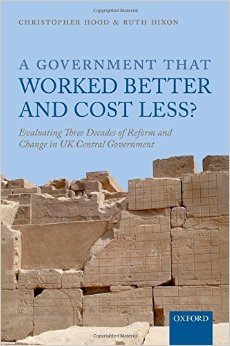 The current issue of Governance features a roundtable on A Government That Worked Better And Cost Less? byChristopher Hood and Ruth Dixon. The book recently received the Brownlow Award from the U.S. National Academy of Public Administration. “This is an important book,” says Per Laegreid. “An important implication is that public sector organizations cannot just copy private sector management tools and organizational forms and expect successful results.” Read his review. NPM “was sold to the world as science-based ‘best practice,” write Demetrios Argyriades and Pan Suk Kim. “After three decades, a new book has come to prick the bubble.” Read their review. ButNancy Roberts suggests that the book may overstate the “level of conceptual clarity or agreement” about what NPM actually involved. Read her review.