Archive for the ‘Uncategorized’ Category
Book reviews: Development, strategic management, multilevel finance
 In the current issue of Governance, Robert Picciotto reviewsThe Politics of Evidence and Results in International Development by Rosalind Eyben, Irene Guijt, Chris Roche, and Cathy Shutt. This book “is reformist rather than revolutionary . . . It stays clear of big ideas. It engages positively with the evidence-based movement rather than directly challenging its fundamental tenets.” Read the review.
Tommaso Agasisti reviews Strategic Management in Public Services Organizations by Ewan Ferlie and Edoardo Ongaro. The book “can be an excellent manual for graduate students . . . [and] is also an an advanced contribution for scholars in the field.” Read the review.
Richard Allen reviews the Handbook of Multilevel Finance edited byEhtisham Ahmad and Giorgio Brosio. “Three stars out of five for this comprehensive volume of papers . . . that, despite some excellent chapters, falls somewhat short of expectations.” Read the review.
How Indian states decide whether to pay their debts
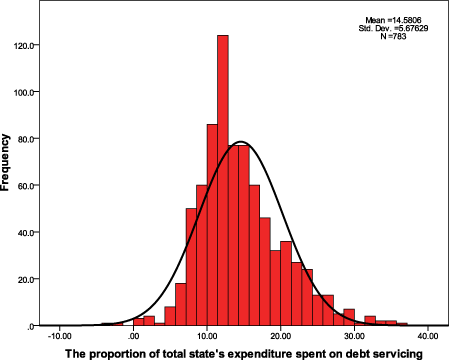 The debt burden of subnational units in many developing countries is rising. India is no exception. State governments face a choice: whether to increase spending on social services, or make interest payments on their debt. In the current issue of Governance, Lawrence Sáez examines the factors that influence this decision. He finds that there are significant increases in expenditures on the debt in years in which state assembly elections are held. Sáez says that this is evidence of a demonstration effect: “namely, an effort by politicians to demonstrate to voters their commitment to responsible economic management, and to seek voter support on that basis.” Read the article.
Enforcing India’s right to education
 India’s Right to Education Act, adopted in 2009, creates a binding obligation on the state to provide elementary education to all children between 6 and 14 years. But little academic attention has been paid to the mechanisms that are crucial to the enforcement of such rights. In the current issue of Governance, Malini Bhattacharjee and Dolashree Mysoor examine how redress procedures for the Right to Education Act work in the state of Karnataka. “The design of the grievance redress mechanism under the RTE Act in Karnataka,” they conclude, “is ill-equipped to deal with a variety of complaints that may arise and ineffective in enforcing the right to education.” Read the article.
Why the UK Parliament really does matter
 Conventional wisdom says that legislatures in parliamentary systems don’t matter very much — and that the British Parliament provides strong evidence of this reality. In the current issue ofGovernance, Meg Russell and Philip Cowley take issue with the prevailing view. Researchers have focused too much on the decision-making stage, while neglecting Parliament’s role at earlier and later policy stages, as well as behind-the-scenes negotiations. After analyzing 6,000 parliamentary votes, 4,000 legislative amendments, 1,000 committee recommendations, and 500 interviews, Russell and Cowley conclude that Westminster’s influence is substantial and rising. Read the article.
Book reviews: Strife in the Middle East, public finance in developing countries
 In his new book, Will the Middle East Implode?, Mohammed Ayob says that there is “a serious danger of a a chain reaction” of implosions “that could engulf much of the region.” Ramazan Erdag reviews the book in the current issue of Governance, along with Rewiring Regional Security in a Fragmented World, edited by Chester A. Crocker, Fen Osler Hampson, and Pamela Aall.“Taken together,” says Erdag, “these two volumes make a significant contribution to international security matters by providing in-depth regional analysis of the current crises facing the Middle East.” Read the review.
And Noel Hepworth reviews Public Finance and Economic Growth in Developing Countries: Lessons from Ethiopia’s Reforms by Stephen B. Peterson: “The book should be recommended reading for donor agencies, who design so many public financial management projects, as well as for consultants and academics.” Read the review.
Explaining how and why indirect rule persists
 It’s commonplace for scholars to explain weak state institutions in many countries as a result of the practice of indirect rule in the colonial era. In the current issue of Governance, Adnan Naseemullah and Paul Staniland argue that this story needs to be refined. In fact, the broad label of “indirect rule” has been applied to “a diverse set of governance forms that need to be clearly distinguished.” Some of those practices persist today — but not simply because of path dependence. Post-colonial governments “have made conscious choices about how to govern,” and used some modes of indirect rule to accommodate the reality of “limited governing resources.” Read the article.